
 |
 |
 |
 |
 |
 |
|
|
|
|
||||||
|
This is a very brief introduction to some of the many forts and towers around Britain. There are very many websites dealing in greater depth with the history and stories surrounding these - some links to which have been provided. A variety of sea forts were constructed around the UK during WWII but not all of them figured significantly in pirate radio activities either due to location (broadcast range) or subsequent removal - many were destroyed immediately after the war as they interfered with shipping lanes. Had they survived, it would have been interesting to see whether they would have been of interest to would-be radio stations. The attraction of the Thames forts was, of course, that they still existed and were perceived to be outside British territorial limits. Also, the transmission distance to the capital was considerably smaller, requiring less powerful transmitters. Broadcasting From the Thames Forts
Thames
Estuary Forts and Towers
          |
|
A few words about
the construction, placement and use of some of the offshore forts and towers,
and some others, around the British coast, many of which still exist. The
offshore Maunsell forts, or towers, which were of greatest interest to the
pirate radio operators of the Sixties, were originally World War II military
facilities built to protect the coastal sea lanes and were essentially of
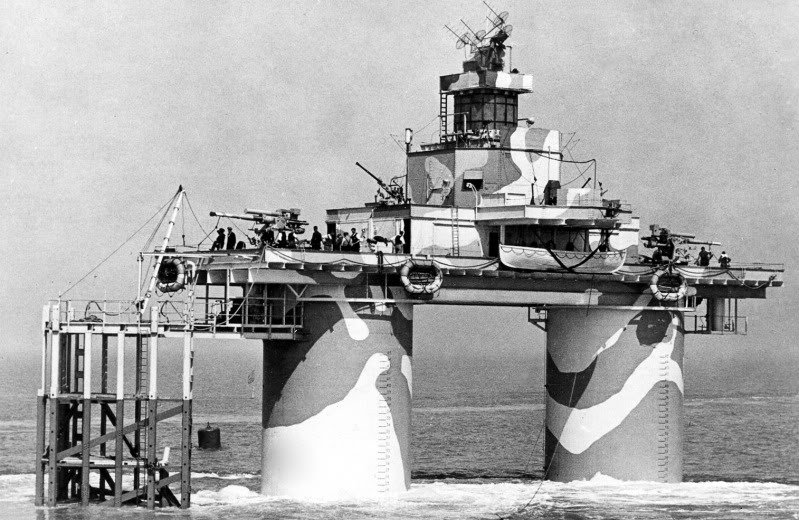
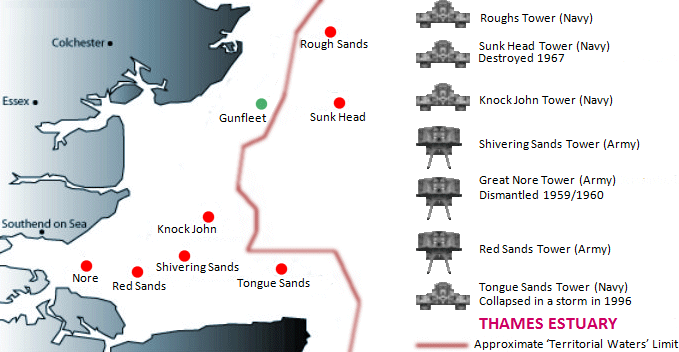
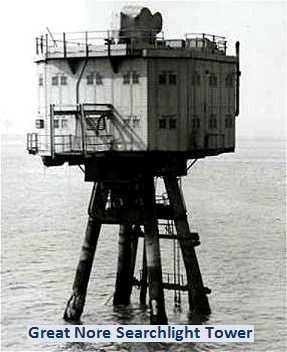
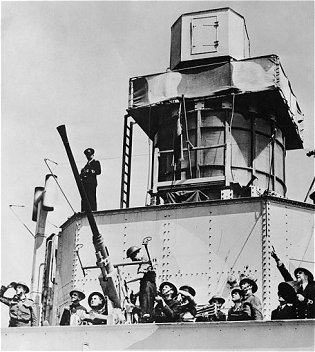
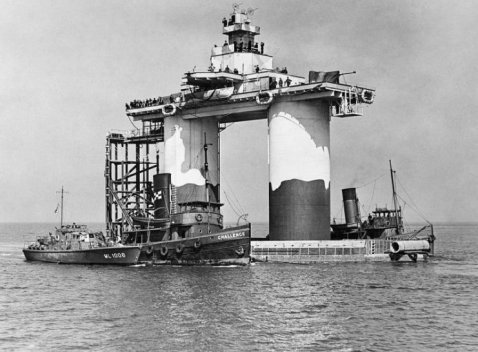
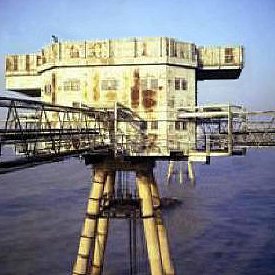
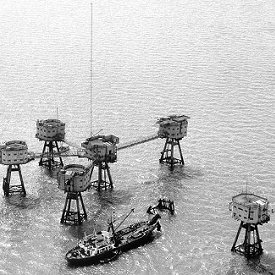
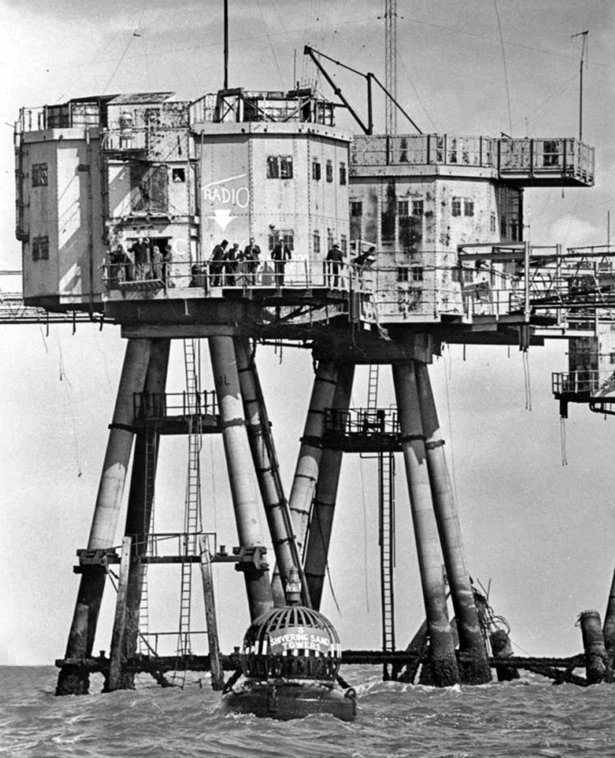
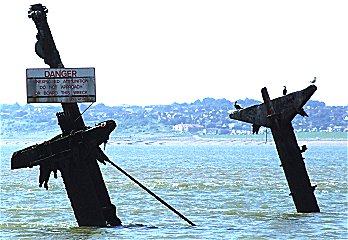
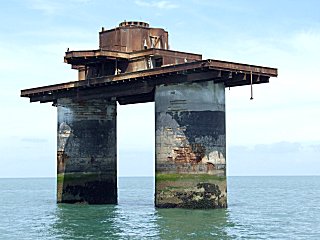
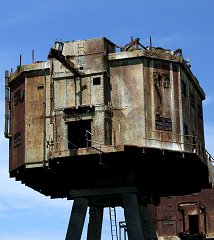
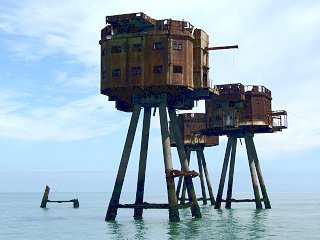
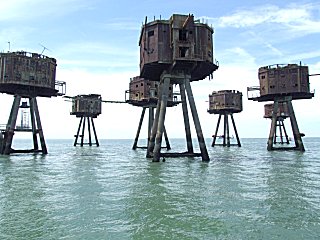
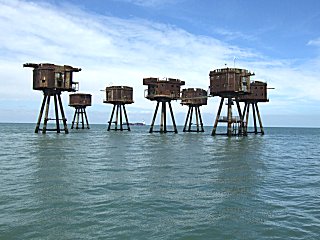
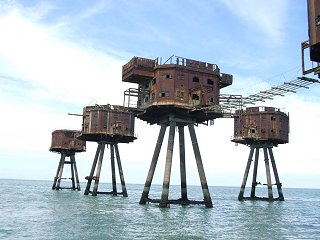
two designs Guy Maunsell was a civil engineer with a great interest in the use of reinforced concrete. Maunsell was 55 when WW II began on 1st September 1939. By October 1940, Britain had suffered at Dunkirk and was experiencing the German Blitz on major cities. Prime Minister Winston Churchill and Commander E.C. Shankland, Port of London Harbour Master, were worried about increasing shipping losses in the Thames Estuary. They needed protection from aerial attack and from the laying of magnetic mines so they requested Maunsell's advice on measures to defend the area from enemy aircraft. His response was 'A Proposal To Establish Martello Towers for the Defence of The Thames Estuary'. Martello Towers had been built as land-based coastal fortifications in Britain during the Napoleonic Wars and Maunsell’s idea was to build similar structures in the Thames estuary. He proposed to build the forts on land, at a site up river, then tow the finished structures to their desired locations at sea where they were then sunk on to the sea bed. Maunsell developed the ideas for both the Army and Navy sea forts, known collectively as the Maunsell Forts. Red Sands, Shivering Sands and Great Nore were Army constructed, originally consisting of seven separate towers, each set on four concrete legs supporting a steel structure 100ft above sea level and connected by narrow catwalks. The Shivering Sands fort, built in 1943 at the Red Lion wharf in Gravesend, consisted of just six towers by the mid Sixties, one having been knocked over by the ship 'Ribersborg' in fog on June 7th 1963. |
 |
 |
|
 |
| There
were other marine structures in the Thames area at various times, including
one thought by many to be one of the 60s 'pirate' towers and was actually
partly refurbished in the 1970s to perform this function for Radio Atlantis.
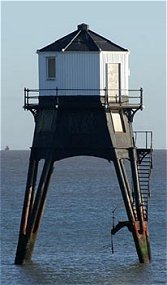
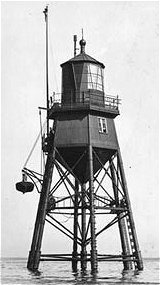
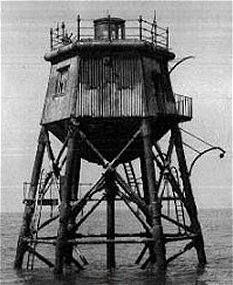
This was Gunfleet,
situated about 6 miles off the coast of Frinton and, at 74 feet, was a kind
of lighthouse looking like a water tank on stilts - not dissimilar to one
of the single sections of the Army forts. It
was constructed in 1850 as a screw pile lighthouse designed by Mr. Walker
of Trinity House but based on the invention of an Irish man called Alexander
Mitchell. Nick Catford advises: Gunfleet lighthouse had not been considered for use by any broadcaster during the 1960s but, in 1974, with the introduction of the Dutch Marine Offences Act, a group of people started work to refurbish the lighthouse for use as a base to re-launch Radio Atlantis as a new English language station, Radio Dolphin. Refurbishment work started in September 1974, just after the new Dutch law came into effect, while on land a 5kw transmitter was being built by former Radio Atlantis engineer Andy Anderson. Studio accommodation, living quarters and a steel framework for guying the planned 120ft aerial mast were all installed during October and November 1974 with a planned opening date for the station of Christmas 1974. Unbeknown to those involved with the new station, the British authorities had been keeping a close watch on all the activity at Gunfleet and, on 19th December 1974, they decided it was time to act. Three boats carrying police, Home Office and Trinity House officials arrived at the lighthouse and requested permission to board, which was initially refused by those in occupation. However, after being informed, correctly or not, that those involved with the station on land had already been arrested they relented and allowed the officials on board. Home Office officials spent several days dismantling all the radio equipment that had been installed on the lighthouse. Four people involved with the planned station were later summonsed to appear at Southend Magistrates Court on 11th December 1975 on a charge of 'conspiring to install apparatus contrary to Section 4 (3) (d) of the Marine etc. Broadcasting (Offences) Act 1967'. They were committed for trial at Chelmsford Crown Court. The trial took place on 5th April 1976 when thyree defendants appeared (the fourth was by then working on the Voice of Peace off Israel). Two of the defendants were given a two year conditional discharge and ordered to pay £50 cvosts. The case against the third defendant who appeared in court was dismissed. |
  |
     |
| Shivering
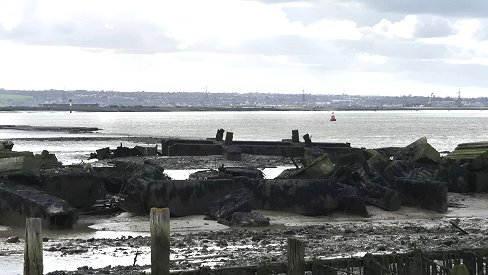
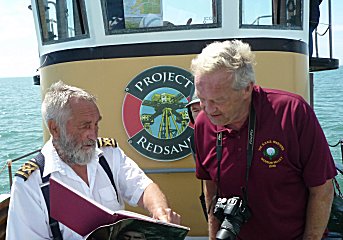
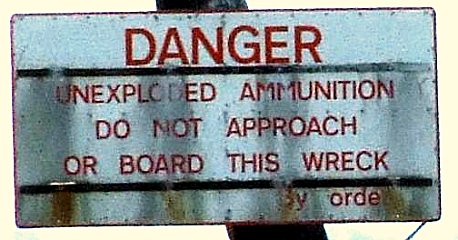
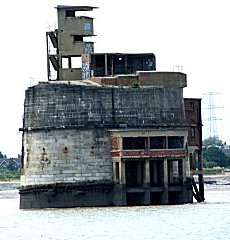
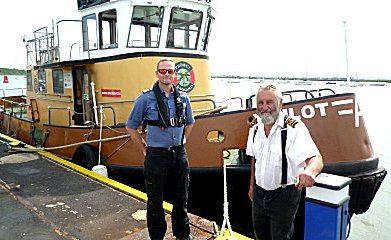
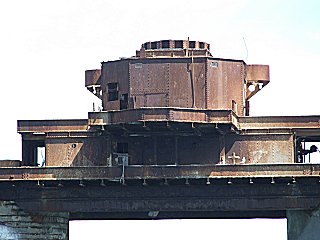
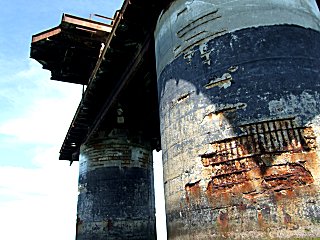
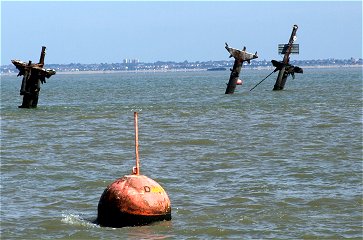
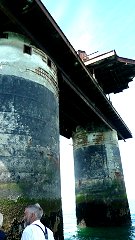
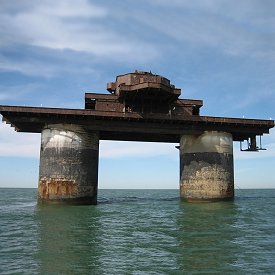
Sands, Red Sands and Knock John 2021 Some images taken by me on a 2021 trip out to the towers on board the X-Pilot who offer excellent sightseeing trips to the World War II Maunsell Forts – the Redsand Towers, the Shivering Sands Towers and the Knock John Fort, all also 60s Pirate Radio Bases, off the Southeast coast of England. Project Redsand CIO was set up with the aims of conserving, preserving and interpreting the proud history of the structures known as the Redsand’s Army Sea Forts . |
  |
     |
      |
      |
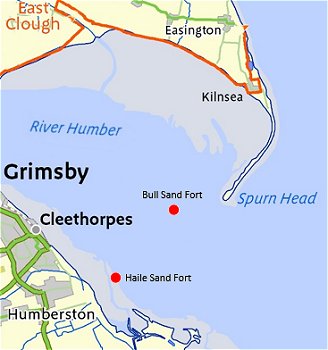
| Although
plans to construct Army Sea Forts in the Humber, Portsmouth, Rosyth, Belfast
and Londonderry estuaries never materialised, three Army Sea Forts were
deployed in the Mersey Estuary as part of the WW2 defences for Liverpool,
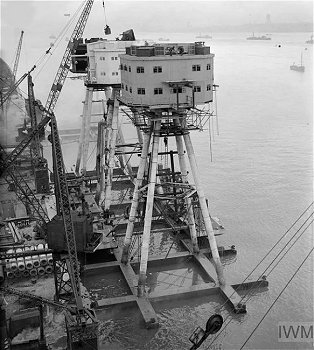
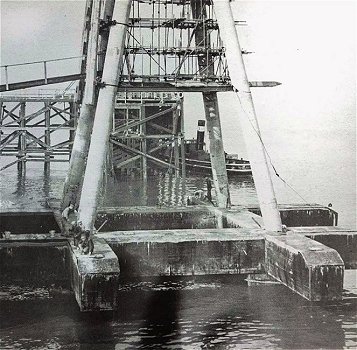
although these were never used for offshore radio broadcasts. After the successful deployment of his Navy Sea Forts in the Thames Estuary, Guy Maunsell, together with Sir Alexander Gibb, was commissioned to build sea forts for Army use in defending the Mersey Estuary in a plan to intercept enemy aircraft trying to bomb the vital docks and industry of Liverpool. The threat and urgent need for these resulted in a significantly different modular design that could be built and placed more rapidly. The Mersey Estuary contains a number of sandbanks and Maunsell believed that its sea bed would be too soft to support the style of pontoon-supported forts that had been used for the Navy in the Thames Estuary. The design for the Mersey forts used a self-burying concrete lattice base, integral to the structure but not impeding the natural movement of sand and shingle in the estuary which would have affected the shipping lanes. Each fort consisted of seven individual towers, linked by tubular steel walkways, placed in relative positions that had been proved successful for land-based installations. The towers comprised one Bofors (anti-aircraft gun) tower, four gun towers, a searchlight tower and a central control tower. The individual towers consisted of four reinforced concrete legs set in a self-burying concrete grid. The legs supported a two storey octagonal steel structure with military equipment on the roof. Built before the Thames Estuary forts, these were in deeper water but the design was followed for those built later in the Thames. The original intention was to place 38 towers in the Mersey Estuary, but only 21 (three forts) were actually constructed and deployed. 49 towers were planned for the Thames Estuary but, again, only 21 (three forts) were built and deployed. A plan for 13 towers in the Humber Estuary never materialised. Commencing in October 1941, the Mersey Forts were built at Bromborough Docks on the Wirral by Cleveland Bridge & Engineering Co Ltd, with each tower taking about eight weeks to construct. Completed forts were deployed between 7th October 1942 and 25th July 1943. Queens Fort was located near the Bar Lightship, Burbo Fort was placed south of the Bar and Formby Fort was positioned north of the Bar. The Mersey Estuary sea forts were never actually engaged in action against the enemy. |
  |
| The
eventual demolition of the Mersey Forts began in the early 1950s, their
removal being given a higher priority than the Thames Estuary forts because
they constituted a potential hazard to navigation in and around the River
Mersey and Liverpool Docks. Demolition was delayed in 1954 when the salvage
ship working at Queens Fort had to be diverted to assist with the more urgent
repair to The Nore Fort in the Thames that had become a hazard to shipping
after storms caused considerable damage that was, shortly afterwards, exacerbated
by a collision with the Norwegian ship 'Baalbek'. Demolition of the three Mersey Forts was finally completed in 1955. |
|
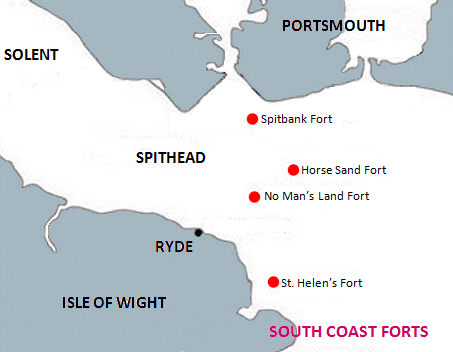
|
|
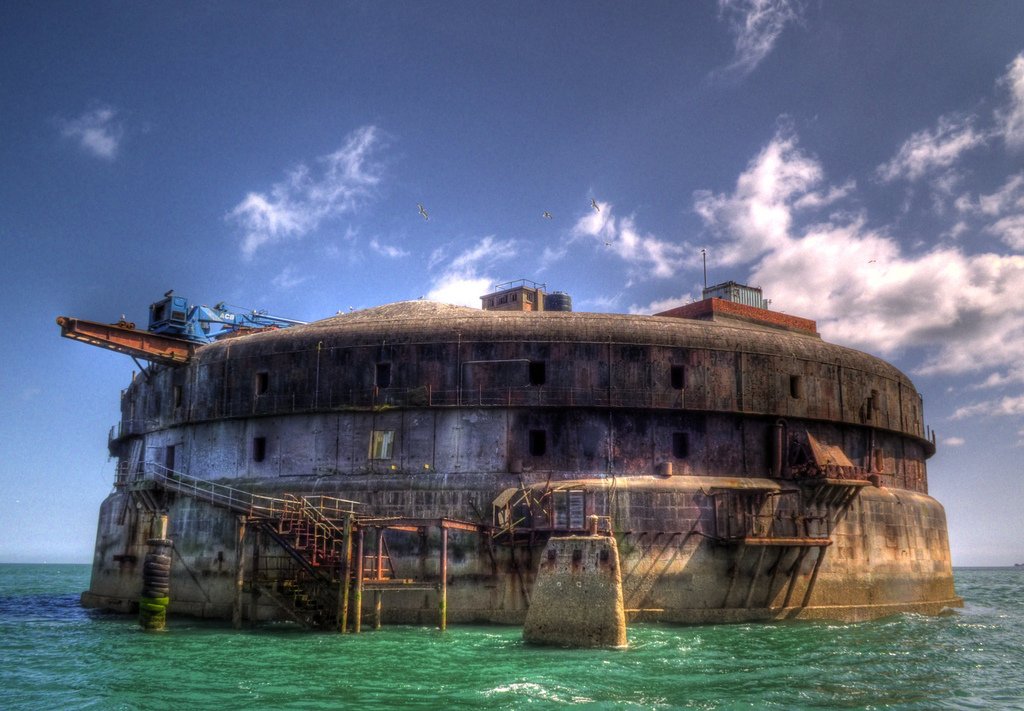
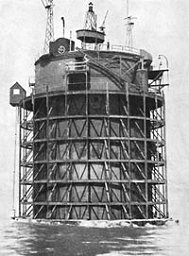
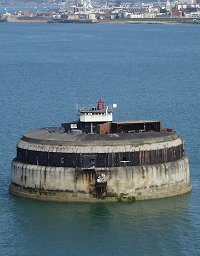
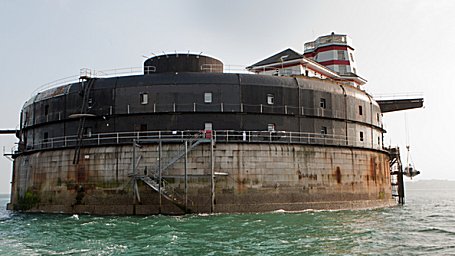
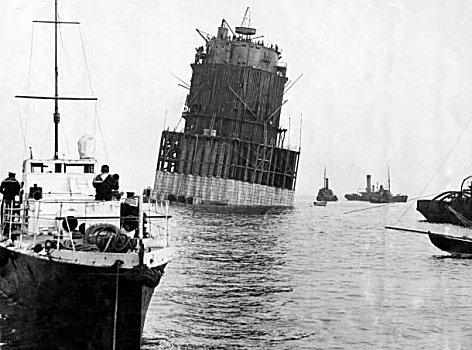
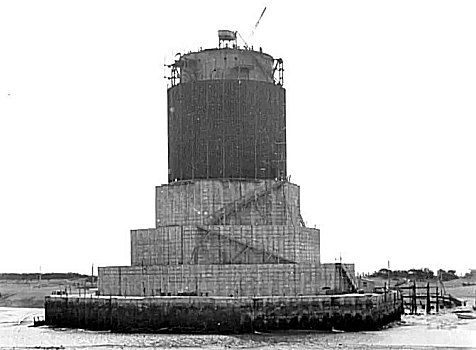
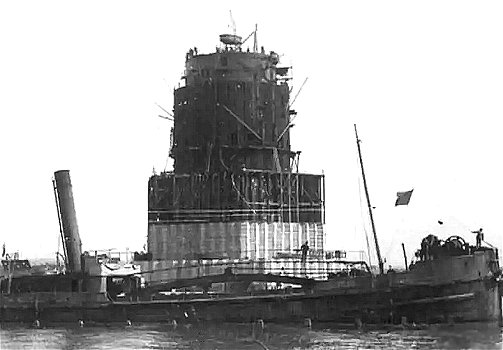
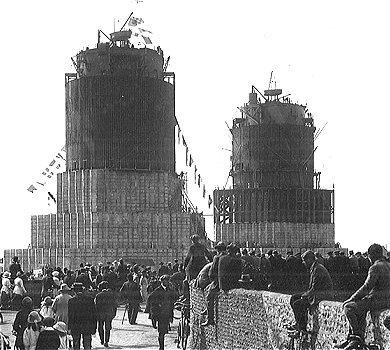
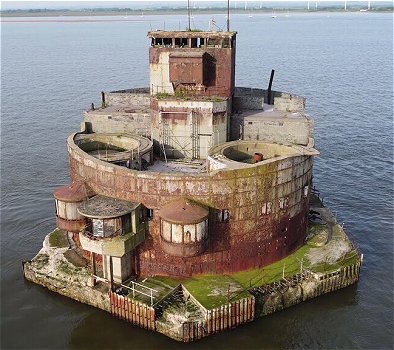
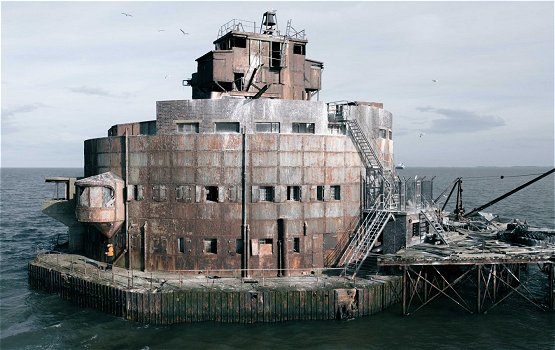
Another
curiosity is the 27-metre Nab
Tower, also designed by Maunsell, situated on the Nab Rocks in the
entrance to The Solent shipping channel to the east of Bembridge, Isle
of Wight. Two towers were originally planned, to be constructed at Shoreham
in 1918 for placement in the Straits of Dover to protect shipping from
U-boats. However, by the end of the war in 1918, only one such tower had
been completed at the then-cost of one million pounds, and was located
in Shoreham Harbour, awaiting deployment. The 90ft (27m) tall, 40ft (12m)
wide cylindrical structure was the first of eight planned outposts, which
the admiralty had intended to arm with two 4-inch guns and link with steel
nets to hamper enemy vessels. A new purpose had to be found and it was,
instead, used to replace the Nab lightship which had provided navigation
warnings since 1812. |
    |
    |
      |
 |
|
|
|
The Dutch prisoners were the first to be released under the Geneva Convention
which requires the release of all prisoners when a state of war does not
exist. The sole German continued to be held as, at some stage, he had apparently
accepted a Sealand passport and was technically guilty of the crime of treason.
Prince Roy, in the interests of Sealand's reputation, eventually released
the man without charge.
On 1st October 1987 Britain extended the limit of its territorial waters
from 3 nautical miles to 12, but had been beaten to the punch by Roy who,
the previous day, had declared his own extension of Sealand's territorial
waters to a similar distance, including large areas of the Suffolk and Essex
coast, to ensure that access to Sealand could not be blocked by British
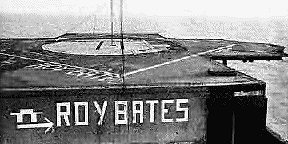
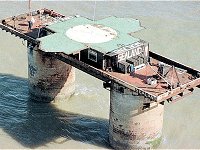
territorial waters. To date, no official agreement has been signed between Sealand and Britain regarding the resulting overlap in claimed jurisdiction but a general policy of dividing the area between the two countries down the middle has been unofficially followed. International law does not allow the claim of 'new' land by the simple extension of sea rights and so Sealand's sovereignty was still guaranteed. Under this law, neither 'country' can claim rights to any part of the other that falls within its 'new' boundary and it is to its credit that Britain has made no further attempts to take Sealand but still treats it as an independent State. Following a ruling by the DHSS, Prince Roy pays no British National Insurance during the time he spends on Sealand. There was another incident involving firearms in 1990 when warning shots were fired at a ship that had strayed too near Sealand. The crew of the ship subsequently made formal complaints to the British authorities but, despite Britain's severe prohibition of firearms, the government chose not to pursue the matter indicating that the Home Office still considers Sealand to be outside their umbrella of control. |
 |
 |
During 1997, a
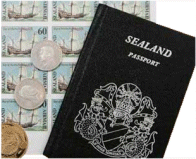
number of forged Sealand passports started turning up across the world,
some of which were apparently used to open bank accounts in various countries
under false names. Less than 300 official genuine pasports were in existence
therefore it was unlikely that the items would be detected as forgeries
due to the fact that hardly anyone had ever seen one. The source was eventually
traced back to the same German who had unsuccessfully attempted to take
Sealand by force. He had created an unofficial 'Sealand Business Foundation'
that allegedly sold over 150,000 fake passports before being found out,
resulting in the curious fact that there are now probably 500 times as many
forged Sealand Passports in circulation than official ones. Apparently,
a large number of the passports were being sold to people leaving Hong Kong
during the Chinese reoccupation for a dollar each. During early 2000 Spanish
police brought action against criminals that had set up a website selling
fake Sealand 'passports' which are suspected of having been used by illegal
arms and drug-dealing rings. One of these fake 'passports' was also encountered
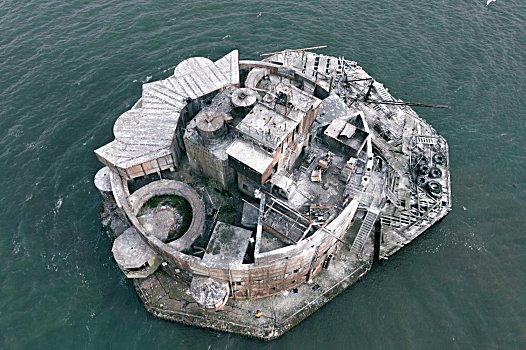
by police investigating the murder of fashion mogul Gianni Versace. The current government of the Principality of Sealand states that "The Principality of Sealand recognises 'jus gentium' and has undertaken to regulate any activity with a view to compliance with 'jus gentium' and international law or to have it regulated." The acceptance and recognition of the Principality as an independent state, or country, has been demonstrated frequently over the last thirty years by both European and other States, but particularly Britain, which has stated unequivocably on a number of occasions that it has no jurisdiction within Principality territorial limits or that it takes no interest in events occuring within the jurisdiction of the Principality. In addition, many legal experts have carefully examined the arguments for and against Sealand sovereignty and have agreed with unanimity that 'jus gentium' applies as the basic principle of law supporting Sealand's independence. Due to failing health, Prince Roy reviewed the arrangements that had been in place for decades and, looking towards the future of the Principality, appointed his son, Prince Michael, the Prince Regent as 'Sovereign pro tempore' by Royal Decree in 1999. In June of 2000 an Anguillan-based company called HavenCo announced preliminary plans to locate its servers and satellite uplinks on the Sealand platform provided its independent status could be validated. The company planned exclusive leases of offices and operations centres in Sealand to users who wished to take advantage of its Internet colocation services. The purpose was to allow companies to use its servers to avoid the government scrutiny made possible by laws taken up by the UK and USA although HavenCo insisted that it would not allow any form of illegal trading. Sealand, of course, had no laws regarding the control of data traffic. To the dismay of many investors, the venture failed to become a a success. Ryan Lackey had moved to the fort in 1999, hoping to establish a safe location for privacy services such as anonymous remailers, and experiments such as anonymous digital cash. In a presentation to the 2003 DefCon convention, a former employee explained how internal politics and lack of investment had thwarted the venture. Contracts were broken, the bandwidth never materialised, and the location was vulnerable to DOS attacks. At the time of his presentation, HavenCo had failed to acquire any new customers and had, in fact, seen several of its existing customers leave. "Sovereignty alone has little value without commercial support from banks, etc," concluded Ryan. On Friday 23rd June 2006 the Roughs Towers top platform caught alight due to a fire caused by an electrical generator. |
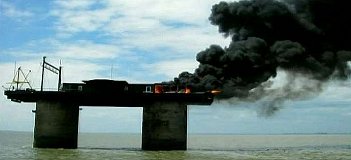
| An RAF rescue
helicopter transferred a security guard to Ipswich hospital directly from
the tower and a team of 15 off-shore firefighters from the National Maritime
Incident Response Group (MIRG) were assembled, but after a reconnaissance
from the air it was decided it was too dangerous to land. There had been
a number of explosions on board as the fire reached gas bottles and batteries.
A firefighting tug sprayed the whole structure with water in the hope this
would eventually cool the fire and starve it of oxygen. The fire was left
to burn itself out and was under control by 3.10pm. Prince Michael of Sealand,
who had been in Spain visiting parents Prince Roy & Princess Joan, flew
back when he heard the news. He managed to get onto the platform the following
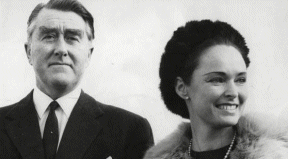
day to assess the damage: "There is an awful lot of damage. It is worse than we expected. It is sortable, but there is an awful lot of smoke damage - it's got everywhere". He was only able to reach the platform at the top of Sealand after his son James, 20, scaled it using a hook ladder. "It was very hairy, he was very brave and I am proud of him. Fortunately the winching mechanism is powered separately to the rest of it with a diesel engine, so we were able to get that working and get the boat up. I think there's about half a million pounds worth of damage. It is such a mess". Roy and Joan Bates had retired to Spain in 2006. Their son Michael, the “Prince Regent” and acting head of state since 1999, had opted for the terra firma of Essex, leaving the platform in the hands of a lone caretaker. With Michael having appointed his own son, James, as Prince Royal, Sealand remains one of the few micro-nations to have established a viable dynasty. |
 |
 |
“Listen, old boy,”
Bates told a journalist in 2000, “I like a bit of adventure. It’s the old
British tradition. Maybe Britain’s changed, but there’s a lot of us still
about.” Roy Bates, born August 29th 1921, died on October 9th 2012, survived by his wife, Joan, and two children. Daily Telegraph Obituary 'Princess' Joan of Sealand (nee Joan Collins) died March 10th 2016 Daily Telegraph Obituary Sealand Official Website 
|
|
UK
web hosting by
 |
 |
All
Original Material Copyright SixtiesCity
Other individual owner copyrights may apply to Photographic Images |